 Reviews

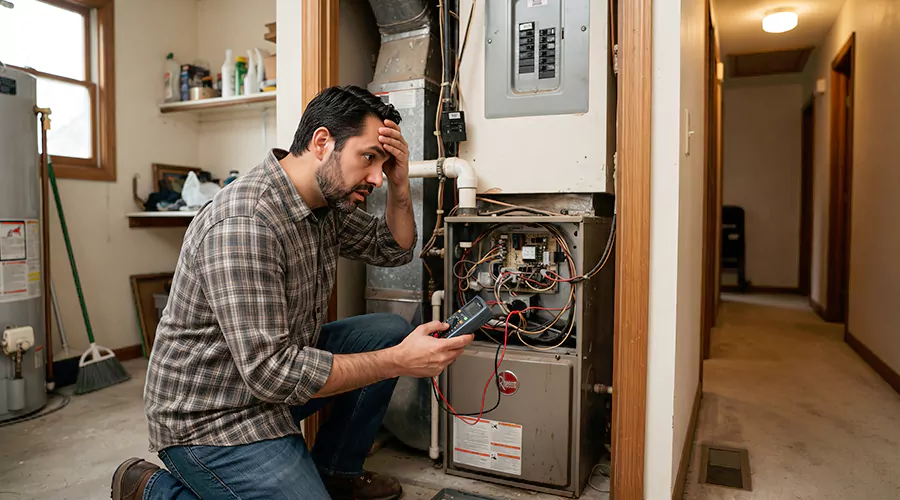
HVAC not turning on can mean a $0 thermostat correction or a repair that reaches $3,000 in 2026. A completely dead system usually points first to the thermostat or electrical supply. Safety controls can also prevent startup. Failed capacitors or motors become more likely when the system clicks or hums but cannot start.
The fastest way to narrow the problem is to identify what still works. A blank thermostat points in a different direction than an active thermostat with silent equipment. Indoor airflow with a dead outdoor unit also creates a different diagnostic path.
Avoid opening electrical compartments during these checks. Many HVAC components operate at potentially dangerous voltage even when the thermostat appears to be off.
Why Would an Entire HVAC System Stop Turning On?
A completely silent system most often has lost its operating signal or electrical power. Start with the thermostat. Then check visible switches and the electrical panel. If power appears normal, a condensate safety switch or low-voltage control failure can stop both heating and cooling equipment from responding.
The important clue is how much of the system has stopped.
- If both the indoor blower and outdoor equipment remain silent then look first at controls or indoor power.
- If the indoor blower runs but the outdoor unit stays silent then the failure has probably moved farther into the cooling circuit.
- A system that clicks or hums is also different from a completely dead unit. Those sounds show that at least part of the startup sequence is occurring.
The HVAC system follows a chain of commands. The thermostat requests heating or cooling. Low-voltage controls transmit that request. Higher-voltage components then power the motors or compressor. Breaking the chain at any point can produce the same result inside the house: nothing happens.
Is the Thermostat Preventing the System From Starting?
A thermostat can prevent startup when it has dead batteries or the wrong operating mode. The temperature setting must also create an active heating or cooling request. Hardwired thermostats can remain blank when the indoor equipment loses low-voltage power even though the thermostat itself has not failed.
Look at the thermostat display first.
- A completely blank screen on a battery-powered thermostat calls for fresh batteries. A blank hardwired thermostat can point toward loss of control power.
- For cooling, select Cool and lower the setting several degrees below the current indoor temperature.
- For heating, select Heat and raise the setting several degrees above room temperature.
- Wait about five minutes after changing the setting. Many systems include a compressor protection delay that prevents immediate restarting.
Next listen for a response.
A thermostat that displays normally but produces no equipment response has narrowed the problem. The next checks involve power and safety controls rather than temperature settings. One useful test is the fan command. Set the fan from Auto to On for a short test. Normal airflow tells you the indoor blower can operate at that moment. No airflow suggests that the indoor equipment has lost power or cannot start.
Could a Breaker or Power Switch Be the Problem?
HVAC equipment can have more than one electrical supply. The indoor equipment and outdoor condenser commonly use separate circuits. A service switch can also cut power to the indoor unit. One electrical interruption can therefore shut down the complete system or only one section of it.
Inspect the electrical panel without removing its cover.
- A tripped breaker may sit between the On and Off positions. Follow the guidance for your equipment and electrical panel before resetting anything.
- Some manufacturers recommend leaving diagnosis to a professional when an HVAC breaker has tripped because the breaker can be responding to a system fault. Trane specifically advises professional investigation rather than repeatedly energizing a circuit with an unresolved problem.
- Never keep resetting a breaker that trips again.
- A second trip can indicate a short circuit or a motor drawing abnormal current. Repeated resets do not correct either condition.
- Indoor equipment may also have a nearby service switch that resembles a normal light switch. Someone can accidentally turn it off during storage or maintenance work.
- Outdoor equipment normally has a separate disconnect as well. Do not remove panels or test voltage inside that box as part of homeowner troubleshooting.
Can a Clogged Drain Shut Down the HVAC System?
Yes. Many cooling systems use a condensate float switch that stops operation when water rises too high. The shutdown protects the surrounding area from an overflowing drain pan. A blocked condensate line can therefore make a working cooling system appear electrically dead even when its major components have not failed.
Air conditioning removes moisture from indoor air. That moisture flows into a drain pan before leaving through the condensate line. Sludge can block that drainage path. When water backs up, the float rises. A safety switch can then interrupt the control circuit.
Look around accessible parts of the indoor unit for standing water. Check the visible drain pan if it can be inspected safely without removing an equipment panel.
- Do not bypass the float switch.
- Bypassing it can restart the equipment while allowing water to overflow onto flooring or ceilings.
Current 2026 pricing places professional drain line cleaning around $75 to $200. That makes a drain shutdown one of the less expensive possibilities compared with major electrical or mechanical failure.
What Does Clicking or Humming Tell You?
Clicking or humming means the system is attempting at least part of its startup sequence. A click can indicate that a relay or contactor received a control signal. Humming without normal motor operation can point toward a failed capacitor or stalled motor rather than a complete loss of system power.
- A completely silent unit sends you toward power and control checks first.
- A click followed by silence moves the diagnosis farther downstream.
- A loud electrical hum with no normal startup can occur when a motor has power but cannot begin rotating.
- One common cause is a failed capacitor.
A capacitor supports motor startup and operation on many residential systems. When it fails, the condenser fan or compressor may be unable to start normally. Carrier and Trane both identify capacitor failure as a common cause of a no-start condition. Current 2026 national pricing places capacitor replacement around $100 to $250. A fan motor repair commonly falls between $100 and $700.
Do not touch or test a capacitor yourself unless you have the proper electrical training. A capacitor can retain an electrical charge after power has been disconnected.
How Much Can an HVAC No-Start Problem Cost?
A no-start repair can cost nothing when the thermostat setting is wrong. Current 2026 national data places many professional HVAC repairs between $130 and $2,000. Major compressor work can reach $3,000. The actual repair depends on which point in the startup sequence has failed.
| What you observe | Possible problem | Typical 2026 cost |
|---|---|---|
| Wrong thermostat mode | Setting correction | $0 |
| Dead battery thermostat | Battery replacement | Low DIY cost |
| Water in drain pan | Drain blockage | $75 to $200 |
| System clicks but will not start | Capacitor | $100 to $250 |
| Thermostat control failure | Thermostat | $150 to $350 |
| No low-voltage control power | Transformer | $200 to $600 |
| Intermittent control operation | Circuit board | $100 to $600 |
| Motor receives power but will not run | Blower or fan motor | $200 to $700 |
| Cooling circuit has lost refrigerant | Leak repair | $250 to $1,500 |
| Compressor cannot start or operate | Compressor | $800 to $3,000 |
A professional service call itself commonly costs about $100 to $250 in 2026. Labor after diagnosis can also run about $100 to $250 per hour depending on how the contractor prices the job. The useful cost insight is that symptoms do not reveal repair prices reliably.
A completely silent system can have a cheap thermostat problem. It can also have a failed transformer. Likewise, an outdoor unit that hums can need a relatively inexpensive capacitor rather than a compressor. Diagnosis should come before part replacement.
What Warning Signs Help Identify the Failure?
The best warning signs describe what happens immediately after the thermostat requests operation. Check whether the display remains active. Listen for clicks or humming. Watch for indoor airflow. Note whether one section starts while another remains silent. These observations can narrow the fault without exposing you to live electrical components.
- The thermostat display is completely blank.
- The display works but neither heating nor cooling responds.
- The indoor blower does not operate when Fan On is selected.
- The outdoor equipment stays silent during a cooling request.
- The system clicks once but no motor begins running.
- A motor hums without reaching normal speed.
- A breaker has tripped more than once.
- Water is standing around the indoor drain area.
- The system starts intermittently after several attempts.
- Operation stopped immediately after a power outage or storm.
The distinction between total failure and partial failure matters most. If nothing responds then controls and indoor electrical power move higher on the diagnostic list. If one component operates normally then the problem is probably farther along the startup sequence.
Intermittent operation deserves attention as well. A component that works on the third attempt is not necessarily healthy. Heat and electrical load can make a weak capacitor or connection fail inconsistently before complete failure.
What Safe DIY Test Can You Do Today?
A five-minute thermostat and airflow test can provide useful information without opening the HVAC cabinet. Confirm the thermostat has power. Create a clear heating or cooling request. Wait through the normal startup delay. Then test Fan On and observe whether indoor airflow begins at several supply registers.
Use this order:
- Confirm the thermostat screen is active.
- Select the correct operating mode.
- Create a five-degree temperature difference.
- Wait about five minutes.
- Switch the fan setting to On.
- Check airflow at two separate vents.
- Look for standing condensate water.
- Inspect the electrical panel visually.
- Write down exactly what happens.
For example, “thermostat works but no blower and no outdoor unit” gives much more diagnostic information than “AC broken.”
- Stop if you smell overheated electrical insulation.
- Stop if the breaker trips.
- Do not remove service panels or reach into the outdoor cabinet.
A professional HVAC diagnostic can then begin with the symptoms you already recorded rather than starting with a vague no-start complaint.
When Should You Call a Professional?
Professional testing is appropriate when the thermostat is requesting operation but the equipment remains dead after safe checks. A repeated breaker trip also needs diagnosis. Humming motors or electrical burning smells need attention. Refrigerant work requires specialized equipment and federal technician certification when servicing can release refrigerant.
An HVAC technician can determine whether voltage reaches the indoor equipment. The 24-volt control circuit can then be checked separately. Testing can identify a blown control fuse or failed transformer. The technician can also determine whether a contactor is receiving the correct command before replacing it.
Capacitance measurements can confirm whether a capacitor is outside its rated range. Motor current can reveal a stalled or failing blower. Refrigerant troubleshooting belongs in this section because federal rules apply to service that can release refrigerant. EPA Section 608 requires certification for technicians who perform covered service work on stationary air-conditioning equipment.
Professional HVAC repair becomes especially important when electrical protection keeps activating. A fuse or breaker is often responding to another condition rather than creating the original problem. Replacing the protective device without identifying that condition can produce another immediate failure.
How Can You Reduce the Chance of Another No-Start Failure?
Regular inspection reduces preventable shutdowns by keeping airflow and drainage problems from reaching safety limits. Filter checks can be done by the homeowner. Condensate drainage should remain clear during cooling season. Periodic professional inspection can identify weakening electrical parts before they fail during peak heating or cooling demand.
- Check the filter on a consistent schedule based on the filter type and household conditions.
- Inspect the visible drain area during cooling season.
- Keep leaves away from outdoor equipment so airflow around the condenser remains open.
- Do not cover operating outdoor equipment with stored items.
- Pay attention to startup sounds. A new hum deserves more attention than a system that has always started quietly.
- Test both heating and cooling before the season when each mode becomes necessary. Finding a startup problem during mild weather gives you more time to address it.
Routine HVAC maintenance also creates a chance to inspect electrical components before they become a no-start failure. Trane notes that regular service can catch smaller problems before they develop into more expensive repairs.
Conclusion
HVAC not turning on should be diagnosed by finding the first point where the startup sequence fails. Check the thermostat and observe the airflow. Look for visible water or a power interruption without opening electrical compartments. Clicking or humming provides another useful clue. If the system remains dead or trips electrical protection, arrange proper testing. This week, run one complete heating and cooling startup test.
Frequently Asked Questions
Many systems use a short compressor protection delay after a thermostat change or power interruption. Waiting about five minutes can prevent you from mistaking the normal delay for a failure.
Yes. A power interruption can affect breakers or electronic controls. If the system remains unresponsive after power is restored, check the thermostat display and visible electrical panel before attempting anything inside the equipment.
The thermostat can display a cooling request even when the equipment cannot respond. A power interruption or failed control component can break the signal path between the thermostat and the equipment.
A severely restricted filter can reduce airflow and contribute to coil freezing or protective shutdowns. Filter replacement is therefore a reasonable early check during a no-start problem.
No. A low-voltage fuse can stop the control circuit while the major equipment remains intact. The reason the fuse failed still needs diagnosis because wiring or another electrical fault can cause it to blow again.
Not based on the symptom alone. Current repair costs range widely because a thermostat problem and compressor failure can both produce a no-start complaint. Confirm the failed component before comparing repair cost with replacement.